
Since the first Hunger Games book was published in 2008, followed by the first film hitting theaters in 2012, The Hunger Games has become one of the biggest young-adult franchises in the world. In 2025, author Suzanne Collins released her latest book in the series, Sunrise on the Reaping. One year later, the film adaptation has arrived. The film features a screenplay by Billy Ray (The Hunger Games, Overlord) and Michael Lesslie (Macbeth, The Hunger Games: The Ballad of Songbirds and Snakes) with Francis Lawrence (The Hunger Games: Catching Fire, The Long Walk) returning to direct. The Hunger Games: Sunrise on the Reaping is a prequel following a young Haymitch during his Hunger Games. It’s the 50th Hunger Games and the second Quarter Quell, meaning he will have to face double the tributes in the arena as he tries to topple the capital’s games.
Before we begin, I want to say that I have read all the books in this franchise and seen all the films. Sunrise on the Reaping has become my favorite book in the series, which is quite impressive given it’s a prequel and the fifth book in the series. I had high hopes for the film going into the theater. I’m happy to report that The Hunger Games: Sunrise on the Reaping is the best film in the franchise since The Hunger Games: Catching Fire. Lawrence wastes no time diving into the emotional devastation of this plot. Haymitch is unceremoniously thrust into the games, in which there will be a total of 48 tributes from the 12 districts. This is a very different version of Haymitch than fans are used to, so the audience gets to see what made him the man he becomes. On top of that, the film shows more behind the scenes details highlighting just how corrupt and evil the capital and President Snow truly are. All of this is before Haymitch even sets foot inside the arena. Once there, the initial spark of the rebellion that will one day lead to Katniss comes to light. What occurs both inside and outside of the arena is beautiful, heartbreaking, and will have audiences wanting to fight against fascist regimes.
I’ve always said The Hunger Games films are some of the best adaptations of novels, with Catching Fire being the most true to the book. For the most part, The Hunger Games: Sunrise on the Reaping brilliantly takes the drama from the page to the screen. The film is 2 hours and 38 minutes long, and the filmmakers did their best to include all the important details. Fans of the book will surely recognize many of the most memorable moments from the page, many leading to some of the most crushing scenes of the film. However, it’s always difficult to include everything from a book of this size into a single film. Because of that, some of the character development gets lost. While Haymitch is a fully fleshed out character, the other tributes and side characters perhaps feel a bit more surface level. It leads to a few of those highly emotional scenes being a bit less gut-wrenching than they were in the novel, but only slightly. There is also some additional footage woven into the end of the film that certainly adds to the anguish audiences feel for Haymitch. At the same time, the film includes the epilogue from the book, which felt unnecessary for the film adaptation.
A hearty round of applause goes to casting directors Debra Zane and Dylan Jury who not only found fantastic actors to portray the new characters, but accomplished the difficult task of casting many younger versions of characters fans know and love. Every actor chosen to be in The Hunger Games: Sunrise on the Reaping is phenomenal. There are too many to discuss everyone, but there are three standouts from this cast. Joseph Zada (We Were Liars, East of Eden) stars as sixteen-year-old Haymitch. Zada had a bit of freedom bringing the younger version of this beloved character to life because he’s such a different version of Haymitch at that age. He not only wonderfully shows the caring, strong, defiant young man Haymitch was, but he also shows how trauma drastically changes the character into the man audiences watched for four previous films. It’s a wonderful, soul-crushing performance that will have fans sobbing in the theater. Mckenna Grace (Gifted, Ghostbusters: Afterlife) plays another tribute from district 12, Maysilee. Grace delivers the fierce side of Maysilee, making her a great competitor in the games, while also having moments that reveal her more vulnerable side. Her portrayal of this character is so aligned with the novel, making it clear Grace was the perfect person to play Maysilee. Finally, we have Jesse Plemons (Bugonia, Games Night) playing a younger version of Plutarch Heavensbee. Plutarch is a character fans are familiar with, but we’ve only ever seen him being cool and calculated as he aids the rebellion. This is also the case for Plemons’ version of Plutarch, but we also get to see a bit more emotion from the character as it’s clearly the early days of his attempts to dismantle the capital, which means he has to improvise quite a bit more. It allows for Plemons to add some more depth to this fascinating character.
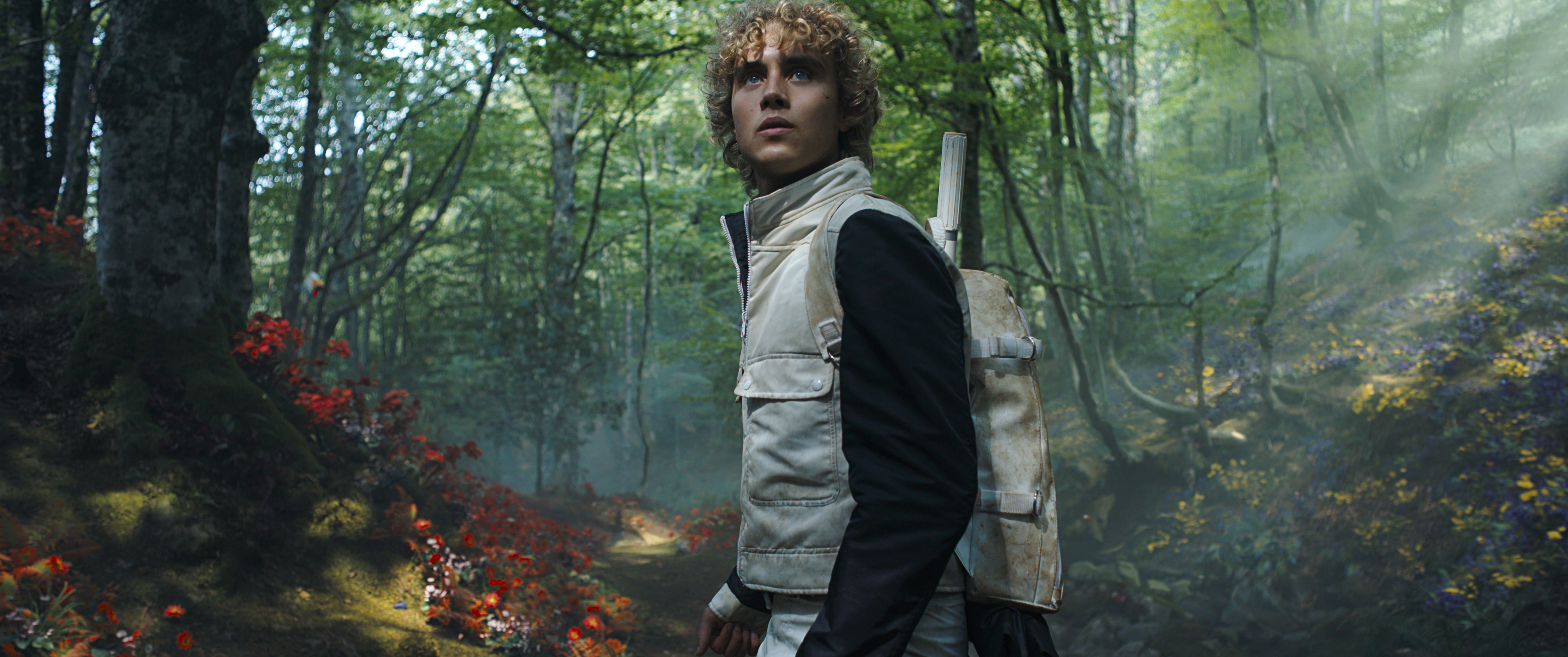
As shocking as it is, The Hunger Games: Sunrise on the Reaping might be the most visually stunning film in the franchise. From the first frame, the cinematography stands out. It helps bring the places and characters to life and shows the beauty of both the district and the capital, even as it shows the danger in both places. The lighting and coloring help in this regard. Especially once the characters are in the arena, the film manages to turn one of the most beautiful set pieces into a death trap. Both the practical production design and the CGI effects are striking. They help to create a bridge between the more rudimentary version of the capital and the games seen in The Ballad of Songbirds and Snakes to the more spectacular, technologically advanced Panem from the original four films. The costume design helps in this regard as well, expertly conveying the class divide between the districts and the capital of Panem, making for some eye-catching looks. Most of the CGI comes into play for the different “mutts” created by the game makers, each creation looking great and terrifying all at once. There is some practical effects makeup for wounds throughout the film, all looking quite realistic, as well as the fabulous makeup for capital residents. Audiences will surely appreciate the score composed by James Newton Howard (The Hunger Games) as he weaves in the themes fans know and love while incorporating new soundscapes to match the on-screen action, drama, and heartbreak.
The Hunger Games: Sunrise on the Reaping is a near-perfect adaptation of the novel and the best film in this beloved franchise since The Hunger Games: Catching Fire. Lawrence once again has shown his ability to transfer events and characters from the page to the screen with ease. There are some things lost in the adaptation, just because there is so much that happens, and it might have benefitted from being split into two films. That being said, the film audiences get is a thrilling, inspiring, and emotional work of art. The entire cast perfectly embodies these characters, with Zada being an absolutely perfect young version of Haymitch. Every sight and sound, from the casting to the costumes to the visuals to the music, was meticulously crafted to tell this important, poignant story. Be sure to see The Hunger Games: Sunrise on the Reaping on the biggest screen possible, exclusively in theaters beginning Friday, November 20th.
OVERALL RATING: 8.5/10

