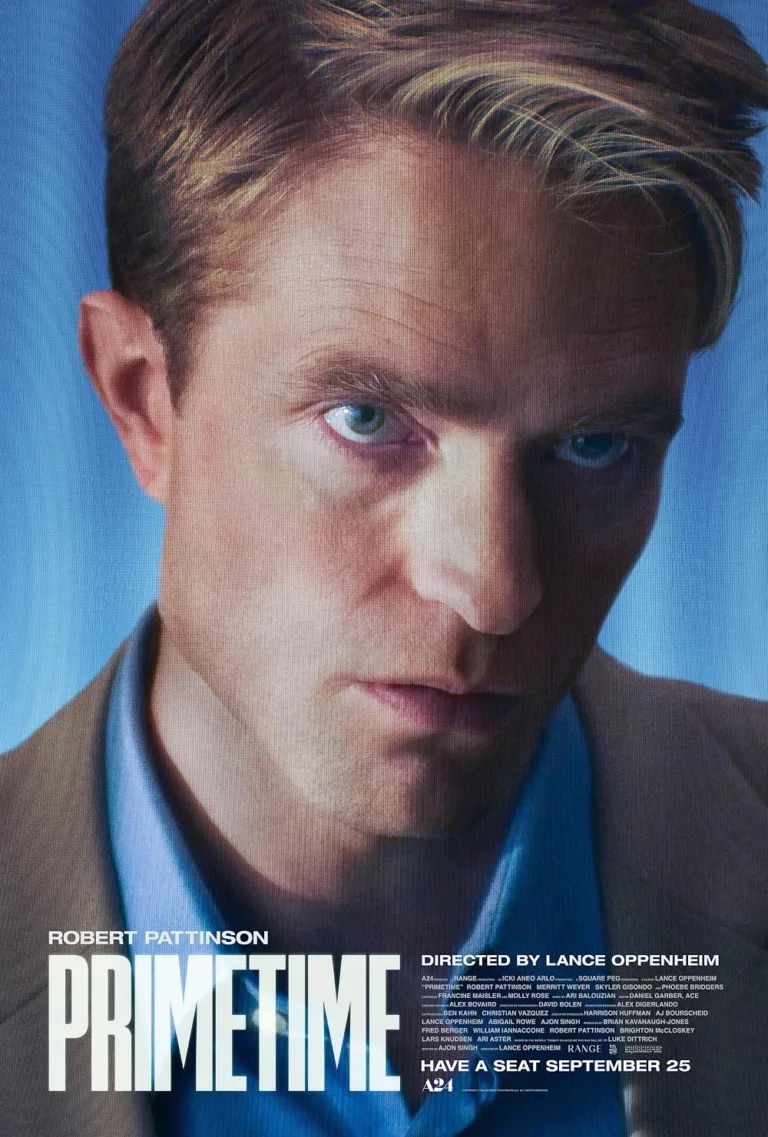
Director Lance Oppenheim (Some Kind of Heaven, Spermworld) is primarily known as a documentarian. With his interest in true events, it only makes sense his first foray into a fictional feature film would be based on real life events. Primetime was written by Ajon Singh and tells the story of the hit TV show To Catch a Predator. More specifically, it follows the show’s host, Chris Hansen, as he struggles to make television history by ridding the world of pedophiles.
It’s important to emphasize that, while this film is based on true events, Primetime is a work of fiction. It’s a dramatization of what really happened. This is also something the real Chris Hansen wants to make known, especially since he’s stated he was never consulted during the making of this film. However, it only seems fitting that his story be exploited for entertainment, just like he exploited others for the sake of ratings. Primetime begins by dropping us right into the middle of one of Hansen’s sting operations. It gives the audience a sense of the show and how it operated, allowing for a peak behind the curtain. While the show began in 2004, it really rose to popularity in 2006 before being abruptly cancelled in 2008 (although the final episode aired in 2007). The film depicts Hansen as his own worst enemy. On the surface, he acts like he is a hero, desperately trying to rid the world of predators to protect children. At the same time, he is obsessed with the show’s ratings. He wants to be the biggest and best show on TV, and he was willing to make rash decisions putting his team at risk in order to achieve that. The film culminated in the case that was never aired on To Catch a Predator. The events shown are mostly true, at least in their broad strokes, and reveals what ultimately led to the end of the show.
As a millennial who spent way too much time in online chat rooms after school, To Catch a Predator was a show I remember watching quite often. It was riveting and, at the time, it felt like the show was doing something good for society. In hindsight, and with how the show ended, its legacy looks quite different. What is so great about Primetime is how well it depicts the exploitative nature of the production. While there were people on the crew who joined because they wanted to do some good, many others were simply there to make entertainment. It shows how producers, and Hansen himself, manipulated others in order to get the most salacious footage they could for the show, all under the pretense of protecting children. At the same time, the film also heavily features one of the actors, nicknamed “Decoy Dan,” hired to play the young teen these men were going to meet. Dan is the moral compass of the film, not only there to show the more manipulative side of Hansen, but also there to be a stand-in for the audience. He’s thrown into a situation he doesn’t fully understand, but he ultimately stays because others convince him they’re doing important, life-saving work. It’s a dark, complicated legacy that will be a heavily debated subject for years to come.
While the subject matter in Primetime is fascinating, the performances are what really makes it a compelling film. Robert Pattinson (Twilight, The Batman) plays the man himself, Chris Hansen. Right away fans will be blown away by how well Pattinson emulates Hansen’s voice. He sounds just like the host, but at no point does it come across as a caricature. Pattison conveys layers to this fictional version of Hansen. He makes it clear this was a man who truly thought he was a hero ridding the world of monsters, yet his increasingly reckless decisions just to make the show more popular often contradicted that ideology. Merritt Wever (The Walking Dead, Birdman) plays the show’s producer, Andie. Unlike Hansen, Andie is there purely to make a TV show. Wever makes it clear this is all just work for Andie, leaving any emotions at the door and doing whatever it takes to ensure everything runs as smoothly as possible. It’s an interesting contrast to Pattinson’s portrayal of Hansen, as Andie clearly has no moral drive behind doing the show, but that almost makes her less of a villain in this story because she doesn’t pretend to be something she’s not. Then there is the scene stealer, Skyler Gisondo (Booksmart, Vacation), as Dan Plum. Dan is the new decoy. While at first, he only takes the job because he wants to become an actor, Gisondo ends up making Dan the moral compass of the story. He’s the one character it’s easy to empathize with, constantly putting himself in the line of fire to catch the bad guys, even as he tries to get his SAG card. The entire cast from top to bottom is stellar, but these three standouts really make for a fascinating watch, forcing the audience to question their own morality.
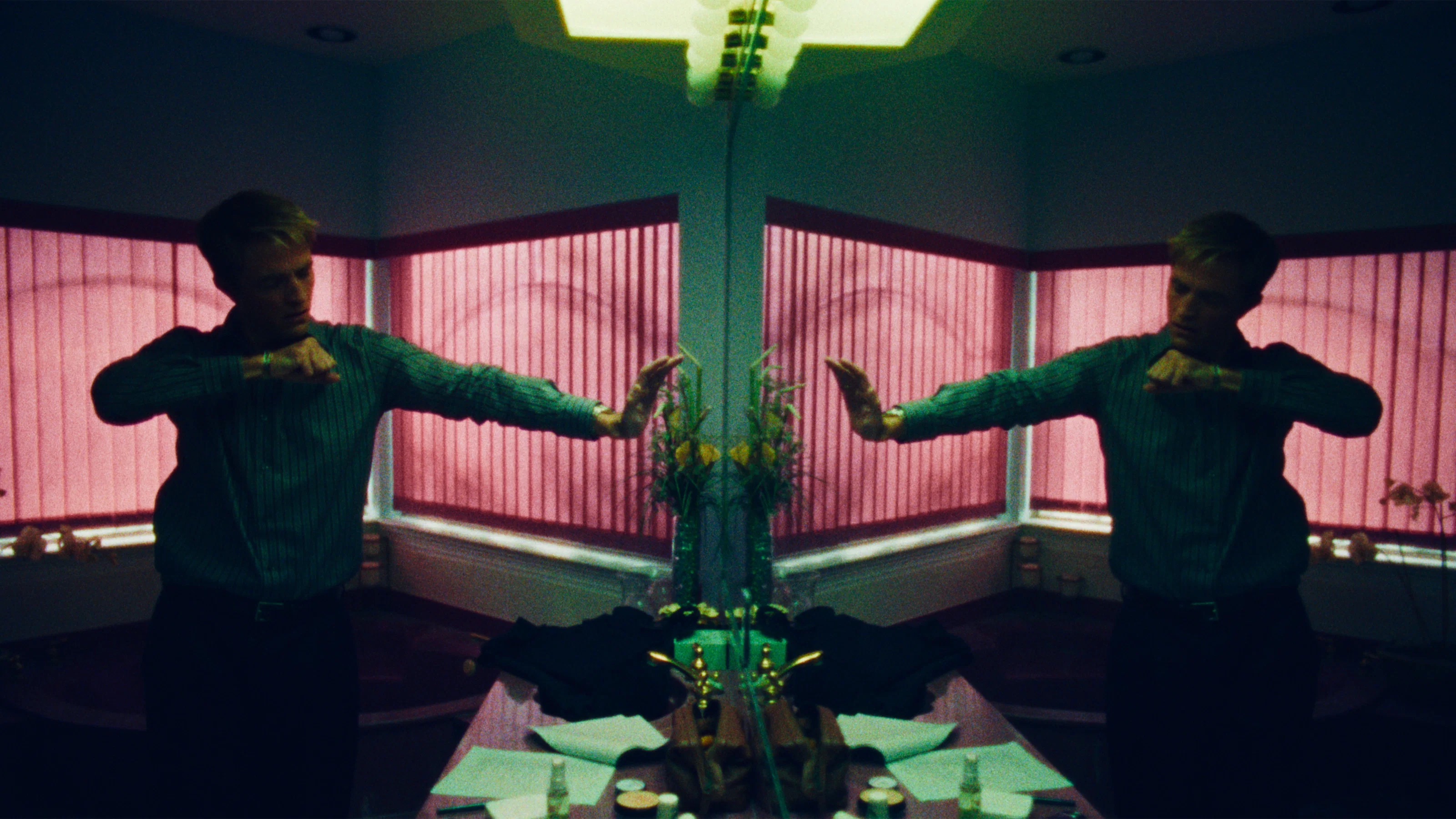
When it comes to the visuals throughout Primetime, this is where Oppenheim turns the film into something a bit more surreal. Right away, audiences are sure to notice the film is entirely in a square aspect ratio, just like the show was when it aired on TV in the 2000s. There are also a lot of interesting lighting choices. There is an overexposed appearance that gives the imagery a harshness, while also incorporating a grain to the film, some blurred focus, and vibrantly colored lighting. It gives the behind the scenes events a certain dreamlike quality, almost as if to remind the audience this is a work of fiction. At the same time, Primetime shows more realistic, naturally colored footage from the hidden cameras and the extra cameras used to film the show. These are the images audiences would have seen back when the show aired. Each visual choice was meticulously chosen to tell the story while also transplanting the audience back to 2006. Oppenheim also made an interesting choice to have a sort of reoccurring boogeyman figure that only Hansen sees. This is the mythical monster he believes he’s trying to catch, and by doing this he will save the world’s children. The look for this monster is simple yet effective. Between this entity, the dreamy imagery, and the hidden camera footage, one could argue Primetime is a found footage horror film. While it’s more grounded and based on true events, what happens is no less disturbing than what one would find in horror.
Primetime is not only a striking psychological thriller, but it also presents a moral dilemma confronting the ethics behind shows like To Catch a Predator. This is a great gateway for Oppenheim into fictional film, allowing him to gives his own spin on true events. Singh crafts a brilliant script that easily draws in the audience and holds them by the throat. It’s a fascinating look at a well-known show, but the performances are what really sell the story. Pattinson, Wever, and Gisondo are all brilliant as they bring these complex characters to life. The visuals help to elevate the story, balancing the appearance of TV from 2006 while also creating something more fantastical. While I feel it would have benefited from either staying true to the facts or leaning more heavily into the horror-adjacent themes, it’s still a well-crafted film. Again, it’s important to remember this is still a dramatization of real events, and one can easily research what really happened on their own to get a more complete picture. Be sure to see Primetime exclusively in theaters beginning September 25th.
OVERALL RATING: 8/10

