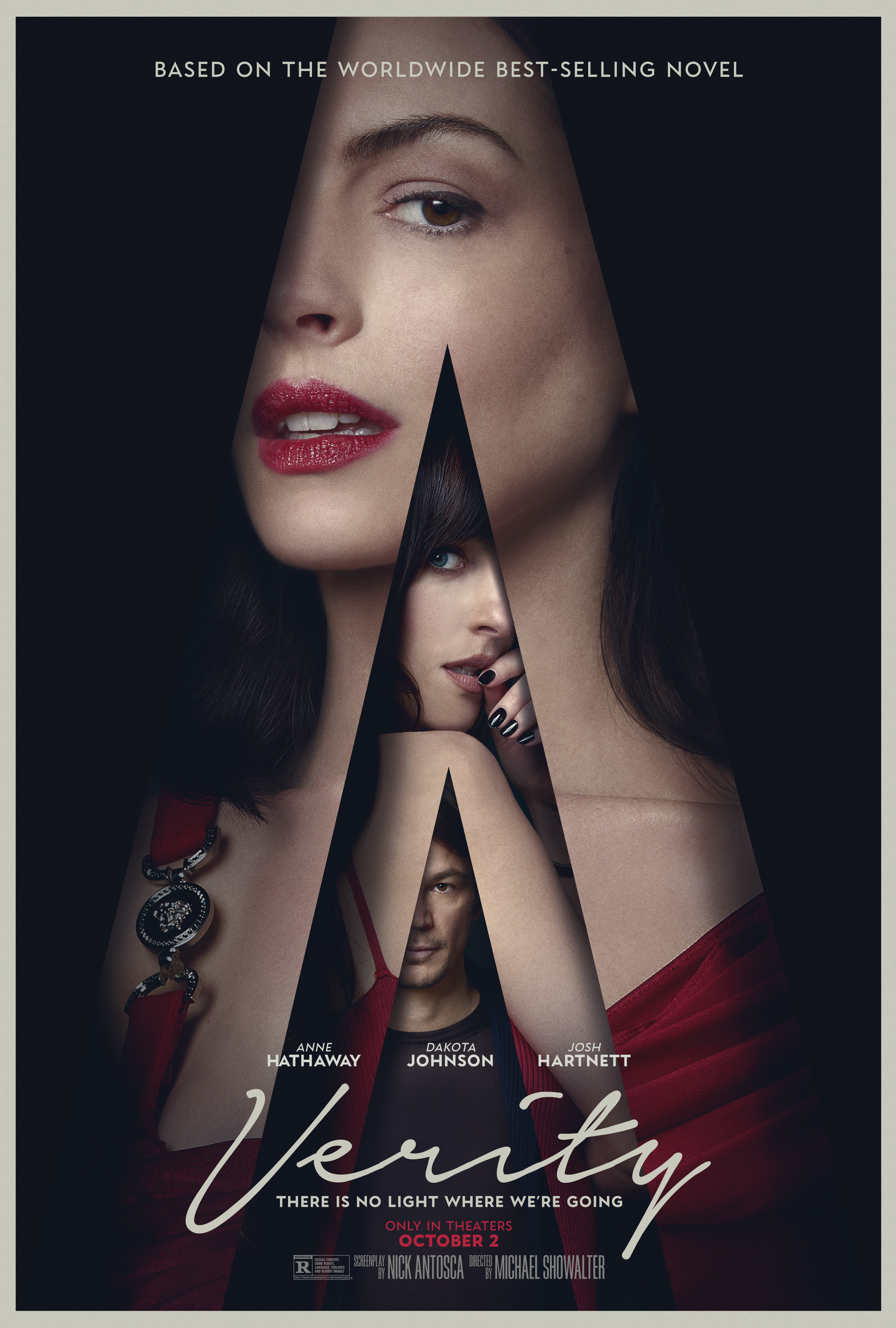
The popular, yet sometimes polarizing, author Colleen Hoover is no stranger to having her books turned into films. Her latest book turned film is Verity, directed by Michael Showalter (The Idea of You, The Big Sick) with a screenplay by Nick Antosca (Channel Zero, Antlers). The film follows Lowen, an author hired to ghostwrite popular author Verity’s next book after an accident left her unable to finish. The more Lowen dives into Verity’s mind and work, the more she questions what’s real and what’s fiction.
Before starting this review, I believe it’s important to note I have never read a book by Colleen Hoover. I have no basis for comparison on how accurate of an adaptation this film is. The most I know about Colleen Hoover is that bibliophiles seem to be quite split on their opinion of her. With this film, it’s easy to understand why. Verity begins by introducing Lowen on the day she’s hired to ghostwrite for Verity. Because of the extent of Verity’s injuries, Lowen has to travel to the author’s family home in rural Vermont with Verity’s husband, Jeremy, and young son, Crew. As Lowen researches Verity’s writing style, her previous books, and all the notes for the next book, she finds herself unraveling the mystery of this strange author. It’s an interesting concept and a fun idea for a film, but this film doesn’t seem to know what kind of story it wants to tell.
With this kind of psychosexual thriller, it’s best to go either fully dark and suspenseful or lean entirely into being ridiculous and campy. Verity moves back and forth, at times being quite silly, while other scenes are far more serious. Similarly, the ending tries to be vague for the audience to decide the truth, but if the audience puts even an ounce of thought into it, the ending isn’t vague at all. It’s as if the filmmakers were trying to make two very different films in one, ultimately creating a lackluster finished product. The dialogue is also quite rough. Again, since I haven’t read Hoover’s work, I’m not sure if this dialogue is directly from her writing or if it’s the adaptation by Antosca. Either way, both the voiceover and the dialogue itself comes across quite exposition heavy and doesn’t feel natural. A great example is one of the earliest scenes in which two characters who just met trauma dump on each other over truly bizarre circumstances. It comes across quite forced and unlike how people communicate in real life. Not to mention, some of the actions carried out by different characters don’t fit with what the audience knows of these people. It all just ends up seeming slapped together in a failed attempt to create something thrilling.
Lucky for the filmmakers, the performances in Verity are a high point. Anne Hathaway (Mother Mary, The Odyssey) plays the titular character, Verity. This role is a nice change for Hathaway, leaning more into her villainous side than audiences typically get to see from her. Yet she also gives Verity layers. She isn’t always the stony author her fans are familiar with. It’s when Hathaway gets to show the different sides of the character that she really shines. Josh Hartnett (30 Days of Night, Trap) plays Verity’s husband, Jeremy. Hartnett has really been leaning into playing dads with secrets, and his role as Jeremy is no different. He’s charming, a good father, and has a bit of a dark side. Dakota Johnson (Suspiria, Fifty Shades of Grey) stars as Lowen. This character is unfortunately the worst written, but Johnson does her best with the material she was given. While at first Johnson shows Lowen as a struggling author given an incredible opportunity, the more she becomes immersed in Verity’s work the less she seems like herself. This leads to some scenes in which Lowen’s actions seem incredibly out of character, but Johnson still makes the character compelling. It’s a small cast primarily in a rural setting, which makes their dynamics and relationships a pivotal part of the plot.
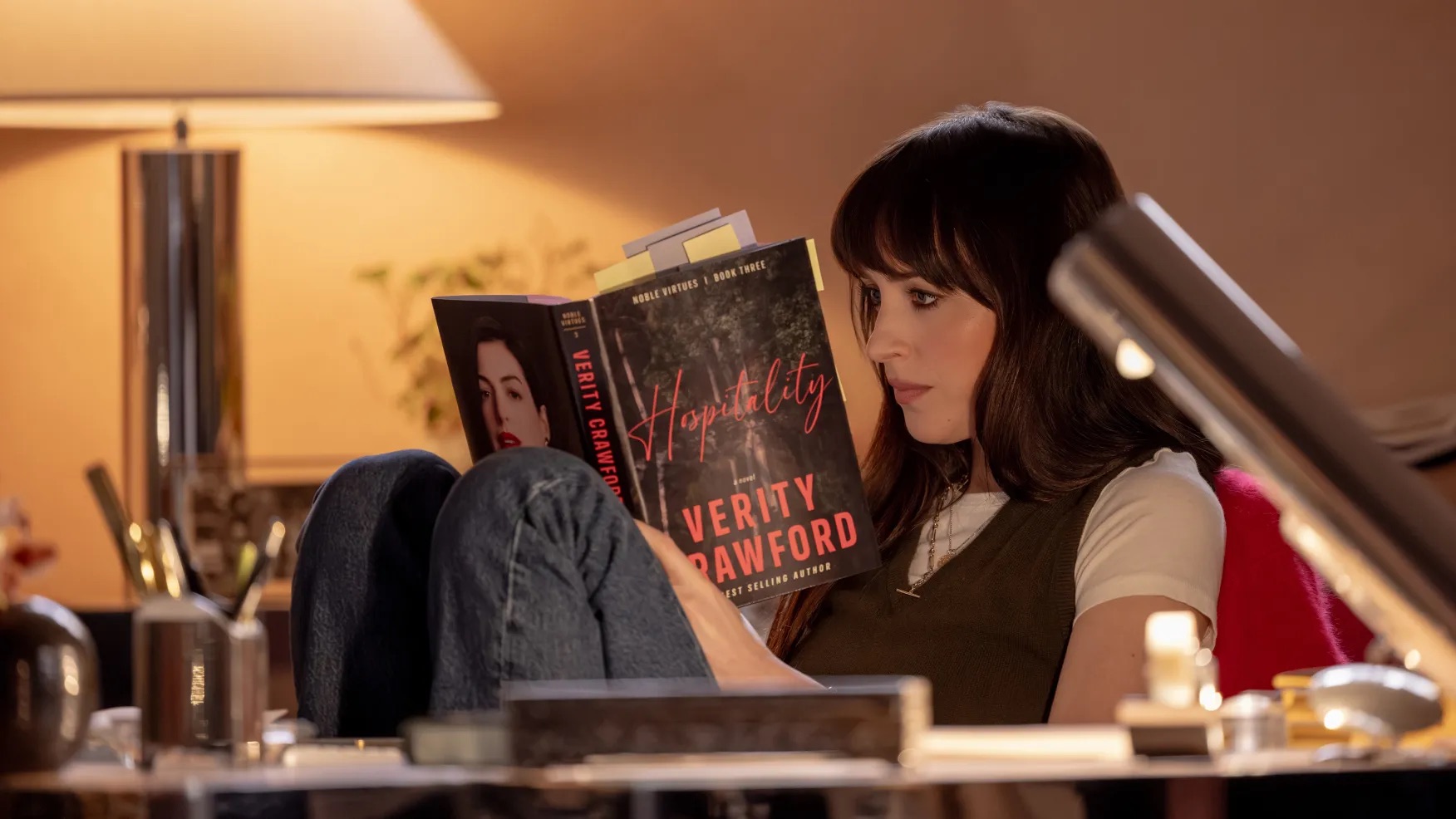
Another high point for Verity is the visuals. For the most part, the films consists of lots of earthy neutrals. This means lots of dark greens and blues, as well as plenty of brown and beige. The exception to this is the color red. Red is used for a very specific purpose throughout this story. Primarily, it’s shown in Verity’s wardrobe and makeup. She’s often shown wearing red dresses with bright red lipstick. The longer Lowen stays at Verity’s home, the more the audience sees her incorporating red into her outfits. At the same time, red is used for a few surprising moments of blood. It makes the audience associate this color with bad things, helping to create an evil persona for Verity. Adding to the visual interest is an absolutely gorgeous set at Jeremy and Verity’s home. It’s a stunning modern cabin on a lake tucked away in the woods. Not only is it stunning, but it also makes for a perfect thriller location in the middle of nowhere. Unfortunately, these positives do not improve the actual content of the film.
Verity can’t decide what kind of film it wants to be, leading to a muddy, aimless, forgettable viewing experience. It’s a film that Hoover fans and BookTok lovers might enjoy, but general audiences will likely find the film uneven at best. Showalter and Antosca surely did their best adapting the book into a film, but it’s apparent they didn’t know if this should be a serious cat-and-mouse thriller or a campy psychosexual romp. The performances and visuals are highlights that fight to make something interesting. Unfortunately, there just isn’t enough good to outweigh the bad. If it had been bad in a fun way, then Verity might still be worthwhile, but the lack of clear vision means it will more likely be forgotten in favor of bolder thrillers. That being said, while this film didn’t work for me, there will surely be an audience out there who enjoys it. If you’d like to give Verity a try, you can see it in theaters beginning Friday. October 2nd.
OVERALL RATING: 4/10

