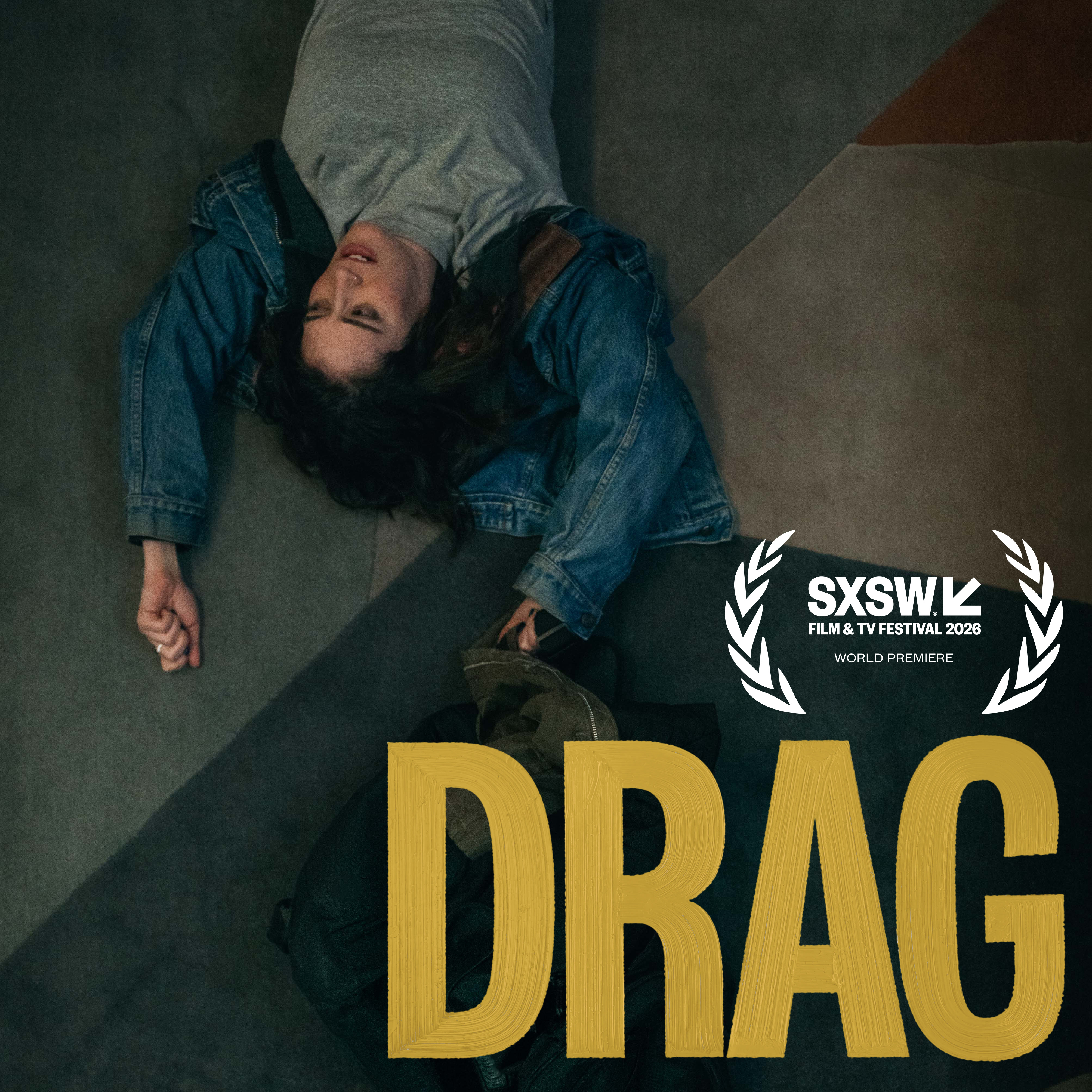
The last world premiere at SXSW 2026 was Drag, the feature film debut from writing and directing duo Raviv Ullman and Greg Yagolnitzer. It’s a darkly comedic thriller that viewers with back issues will likely connect with. Two sisters go to a secluded modern home to rob it when one of the sisters throws out her back. Unable to move, she has to be dragged around the house so the pair can avoid the homeowner and escape with their lives.
For a first feature, Drag is fairly well done. When we meet the sisters, they’ve just arrived at the remote midcentury modern home they intend to rob. The older sister is the “fuckup” of the family. She works a dead end job as a bartender, and it was her idea to come to the secluded house to rob it. The younger sister, on the other hand, has her life together. She has a husband, a child, and her own business. Yet for some reason the younger sister agrees to be her big sister’s lookout for the robbery. It should have been a quick, easy job, but then big sister throws her back out. Little sister goes to help her, dragging big sis all over the house, when the homeowner unexpectedly comes home early. At first, the film is a rather goofy slapstick comedy as these sisters get into more and more ridiculous situations thanks to big sister’s back issues. Once the homeowner arrives, the situation takes a dramatic turn. There is still some humor throughout, but the tonal shift changes the film into a much more serious, dangerous story. It brings in a couple of new characters to further alter the sisters’ plans, putting them in grave danger. The basic premise is interesting, and the dialogue written between the sisters feels like a very authentic sibling dynamic. However, the film tries a bit too hard to subvert expectations after presenting the initial setup of a robbery thwarted by back pain. It throws some wild swings, which will certainly keep audiences’ interest beyond just seeing one sister dragged all over the house, but it doesn’t fully explore those more outlandish elements. The film also leads to a conclusion that will undoubtedly polarize audiences. It is an ending that feels earned, but it will still leave a bad taste in some viewers’ mouths.
With a small cast of only four actors, the performances in Drag are vital to its success. Lizzy Caplan (Cloverfield, Mean Girls) stars as the messed up big sister. Caplan is the true star of this film. There’s something about her portrayal of the character that’s extremely endearing, despite the fact that every bad thing that happens in the film could be considered her fault. Caplan also does a great job of balancing her character’s obvious physical pain, her comedic sisterly bickering, and the panic at being trapped in the house with the homeowner. Lucy DeVito (Blonde, Jumanji: The Next Level) plays the more responsible younger sister. While a lot of the sisterly fighting between Caplan and DeVito is great and feels very real, DeVito also comes across as a bit more stiff in her performance. Some of this can be attributed to the character she’s playing, but there are other scenes in which this stiffness can take the audience out of the film. John Stamos (Full House, You) gives a delightfully bizarre performance as the homeowner. It’s quite different than what fans are used to seeing from Stamos, but he plays the character quite memorably. He even gets a great dance sequence to add to the absurdity of his character. Rounding out the cast is Christine Ko (The Handmaid’s Tale, Tigertail) as the homeowner’s date. For the most part Ko is under the influence as this character, and she plays intoxicated very well.
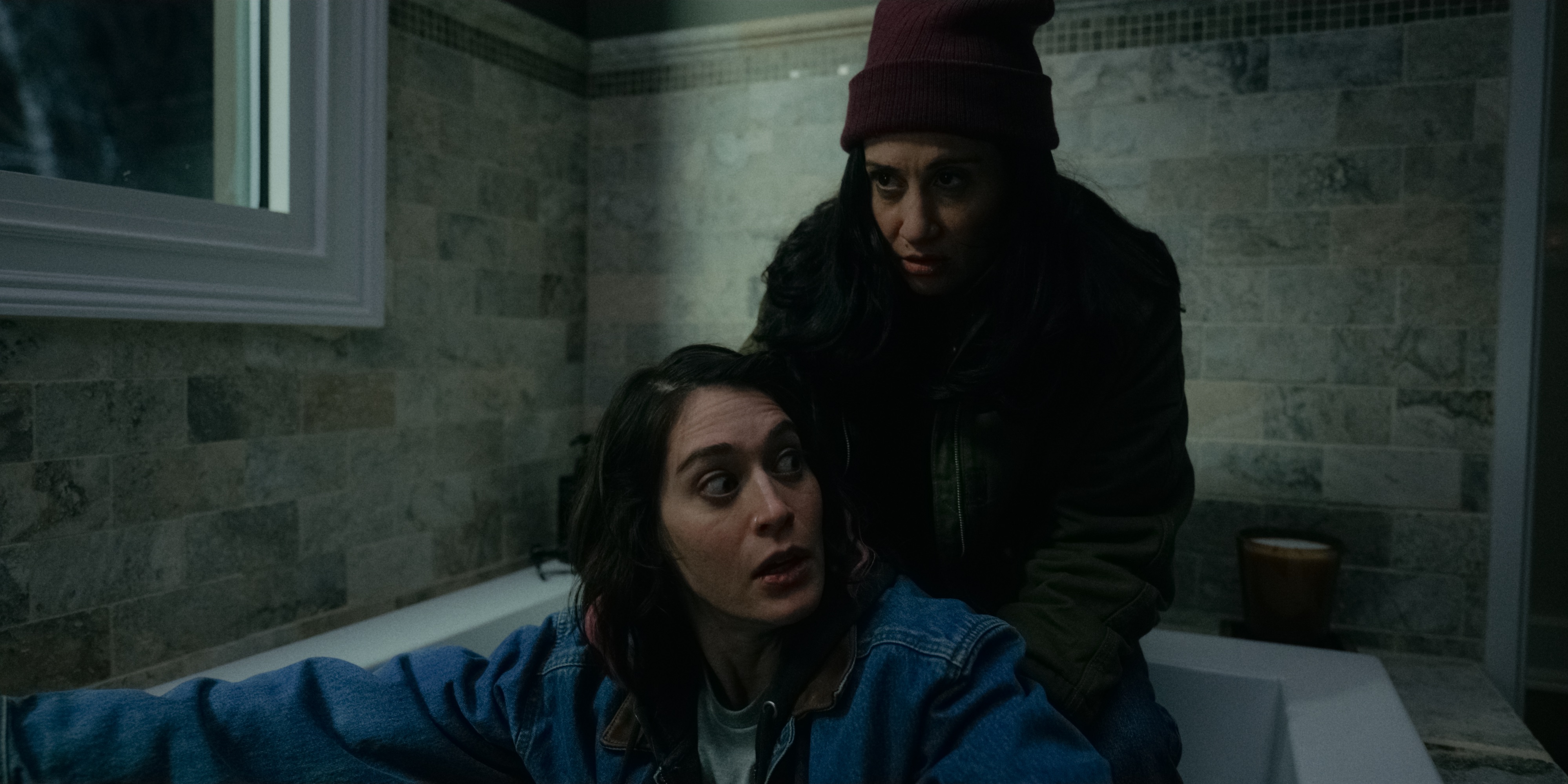
With a small budget and small cast, Drag still manages to have some great visuals. The home that acts as the backdrop of the film is absolutely gorgeous. With floor to ceiling windows to show off the remote, forested area, the midcentury modern manor is large, rich, and has plenty of nooks and crannies to hide in. The film also features minimal yet very well done practical effects. Most of these effects are applied to Caplan as she continues to get hurt in her prostrate state, ranging from bruising to larger wounds. A surprising visual element are a number of paintings of women. Stamos’s character is an artist, so his home is not only filled with beautiful art he purchased, but also many paintings done by his character. These paintings are both beautiful and a bit unnerving, which fits his character quite well. Drag might be a low-budget indie film, but you wouldn’t know that by looking at it.
Drag is a comedic, tense thriller with a great initial premise that gets a bit lost in the twists and turns. It’s definitely a great feature-film debut for Ullman and Yagolnitzer, especially when it comes to the humorous dynamics between the sisters. It almost feels like two different films mashed into one, but the tonal shifts throughout the film will keep audiences at the edge of their seats. Caplan is the standout star, especially considering she’s lying on the floor for a majority of the film, but Stamos also gives an unsettling performance audiences will remember. The single location thriller has great visuals and an authentic sisterly dynamic, but the climax of Drag is sure to upset some audiences. Love it or hate it, the end of Drag is sure to stick with viewers long after the credits roll.
OVERALL RATING: 6/10
 The Blogging Banshee