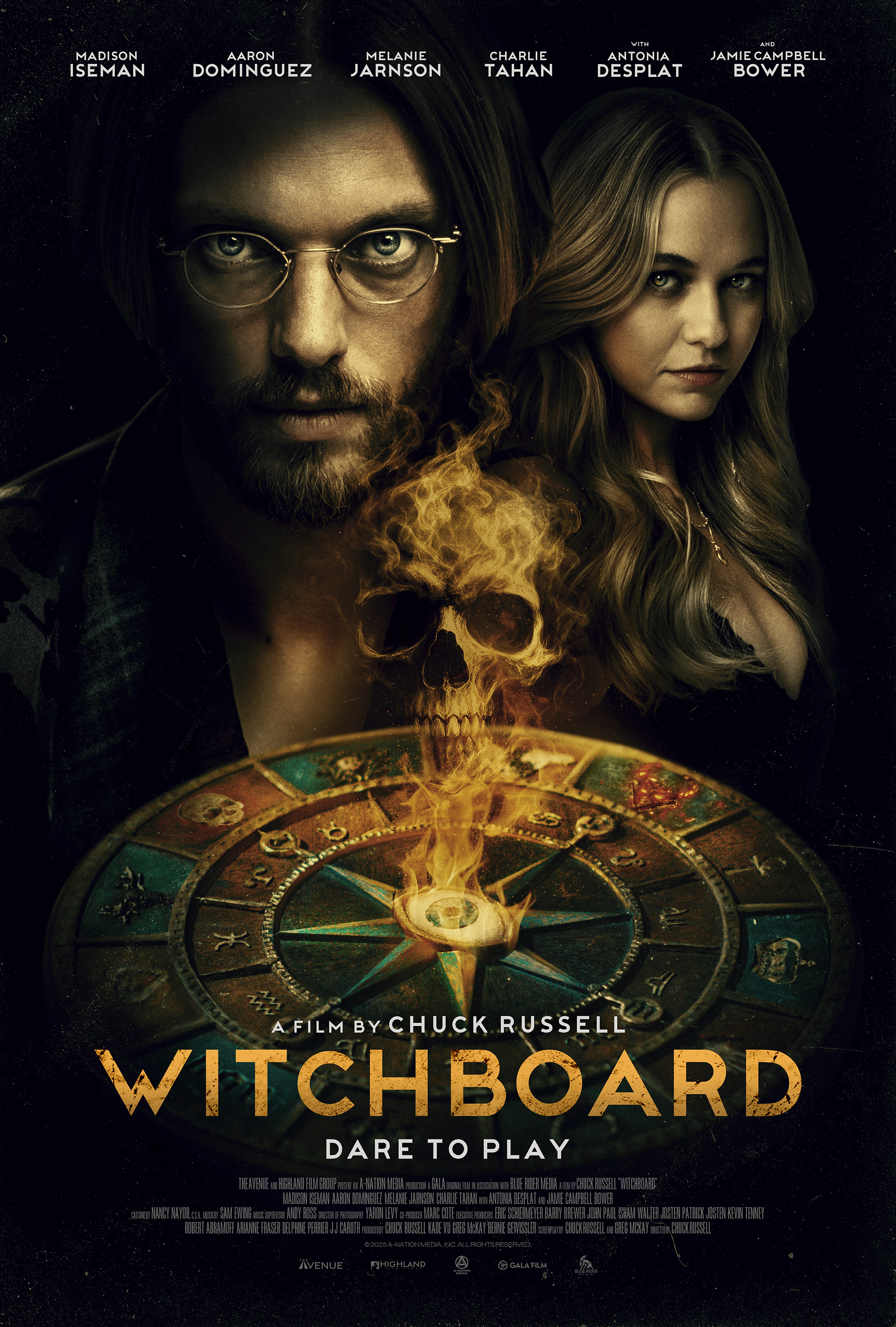
In 1986 the cult classic horror film, Witchboard, was released by writer and director Kevin Tenney. Almost 40 years later, legendary horror director Chuck Russell (A Nightmare on Elm Street 3: The Dream Warriors, The Blob) has brought to life a reimagining of that story. Co-written by Russell and Greg McKay, Witchboard tells the story of a young couple in New Orleans preparing to open their own restaurant. After finding an ancient, cursed witchboard, strange and deadly things begin to disrupt their once happy lives.
Witchboard is a modern film that feels like a throwback to 80s horror filmmaking. After the cursed board is stolen from a museum, it’s found by Emily, a former drug addict building a new life with her boyfriend, Christian. Initially, the pair view the antique as a fun find they can use as a decoration in their apartment or new restaurant. Yet Emily continually finds herself drawn to it, even as bizarre accidents begin happening to those around her. Evil forces are at work, both from within the board as well as from outside it, trying to gain power. It’s a fascinating take on the basic premise of a cursed witchboard. The filmmakers found a number of ways to update the story and create something fresh. Two important changes are that the board isn’t a Ouija board, as is common in many horror films. Instead, it’s a pendulum board used by a witch in France dating all the way back to 1693. On top of that, it subverts the common horror trope of an evil witch out to get others. Instead, the woman who previously owned the board was a healer, unjustly abused and cast out by the local bishop, only becoming “evil” because others made her that way. It makes for a far more compelling story, highlighting religious corruption and how far men will go to gain power over others.
While much of the story is fun, unexpected, and thrilling to watch, there are certain elements that don’t work as well. Witchboard, for the most part, tries to show the witch in a far more empathetic light. Yet the film still portrays her as the villain of the story, even if she’s one of many, by killing innocent people and tormenting Emily. Ultimately, the story ends up falling back into the typical villainization of witches, even when it tries desperately not to. There are also a number of characters and moments that seem to be in the film more for aesthetic choices, rather than having any real relevance to the plot. This includes a trio of white-haired Wiccans, who seem to be in the film just to look cool, and a couple of people in the climax that turn into CGI creatures for no apparent reason. Despite some of these inconsistencies, Witchboard is still exciting and nostalgic, sure to entertain audiences from start to finish.
Witchboard has a great cast bringing these characters to life. Madison Iseman (Riot Girls, Annabelle Comes Home) stars as Emily. Emily has had a hard life, but she’s finally at a place where she’s happy and healthy. Iseman always brings an endearing quality to the characters she plays, and she makes it easy for the audience to care about Emily and fear for her safety as the board begins to take over her life. Aaron Dominguez (The Inspection, Breathe) plays Emily’s boyfriend, Christian. It’s clear Christian is protective of Emily, but Dominguez creates a great balance that doesn’t make the character seem overbearing in his quest to help the woman he loves. Audiences will also be delighted to see Jamie Campbell Bower (Stranger Things, The Mortal Instruments: City of Bones) as Alexander Baptiste, a mysterious Wicca expert who offers to help the couple, but with ulterior motives.
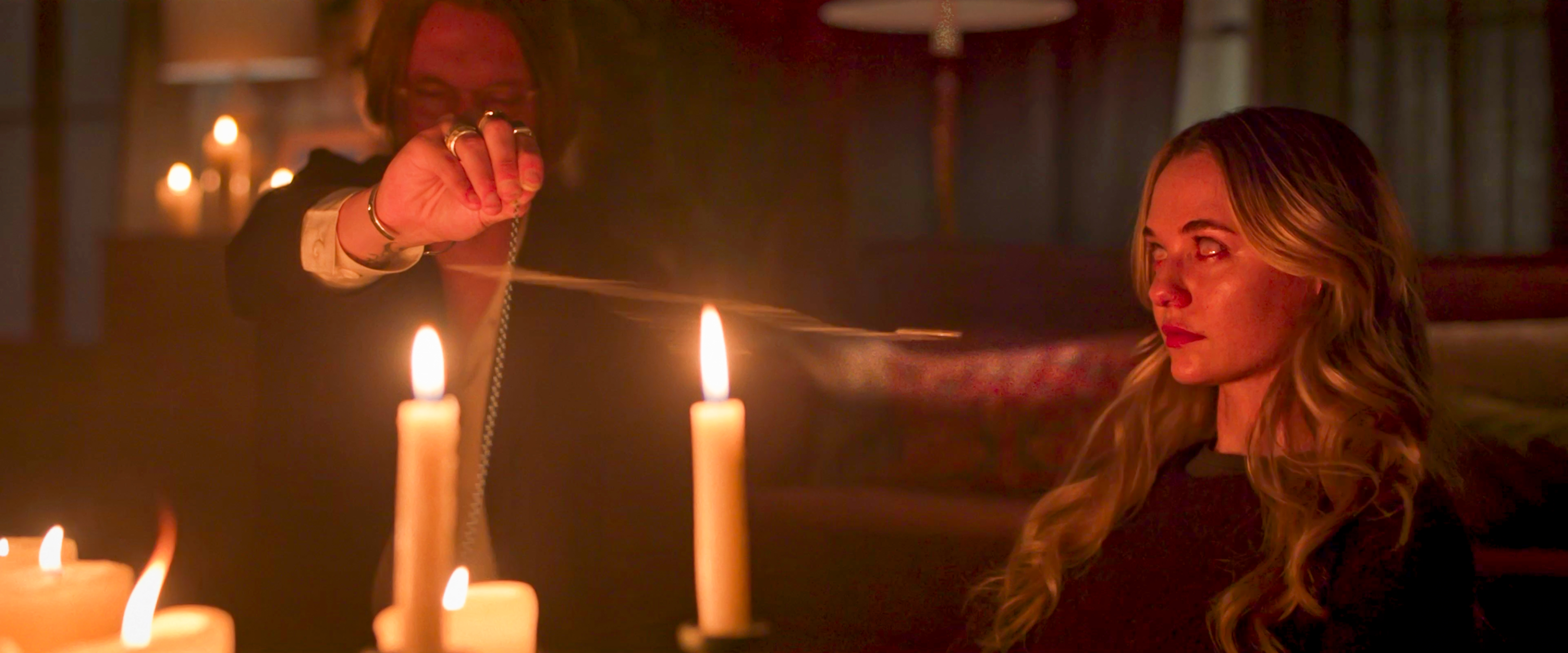
The visuals of Witchboard are a mix of highs and lows, which also seems to be a nod to 80s horror cinema. The New Orleans sets are fantastic, creating a sense of beauty and mystery all at once. One design element that’s a true standout is the board itself. Because the filmmakers decided to move away from a classic Ouija board, they had a bit more freedom to create something unique. It has a distinct handmade look, while still beautiful, and certainly appears to be an antique. While the CGI visuals leave something to be desired, the practical effects are quite well done. They add to the horrors with plenty of blood and dismembered body parts. As for the costume design, the 1600’s period costumes generally look great, as do some of the modern outfits. That being said, the hair, makeup, and costume design for the witch after she’s been cast out moves away from the realistic look of that time period and turns to something a bit closer to a Spirit Halloween costume. That also goes for the hair and costume design for the previously mentioned Wiccan triplets. Yet even when the visuals don’t seem to match the rest of the film, they still add a layer of fun to the dark tone of the film.
Witchboard might be uneven at times, but it still delivers an unexpected, thrilling tale of injustice and magic dripping with 80s nostalgia. Russell and McKay took the basic premise of the 1987 film and created something entirely different. It speaks to the more modern views of horror audiences today, while still clinging to some of the classic tropes. Iseman, as always, lights up the screen with her charm and makes the audience fall in love with her. With rich, vibrant visuals bringing the horrors to life, along with a few good scares, this makes for a fun popcorn horror flick. Witchboard will be available exclusively in theaters beginning Friday, August 15th.
OVERALL RATING: 6/10
 The Blogging Banshee