Disclaimer: This piece was written during the 2023 WGA and SAG-AFTRA strikes. The Blogging Banshee fully supports those on strike and wrote this review in accordance with the WGA and SAG-AFTRA guidelines. You can learn more about the strikes and how to show your support by clicking the links provided above.
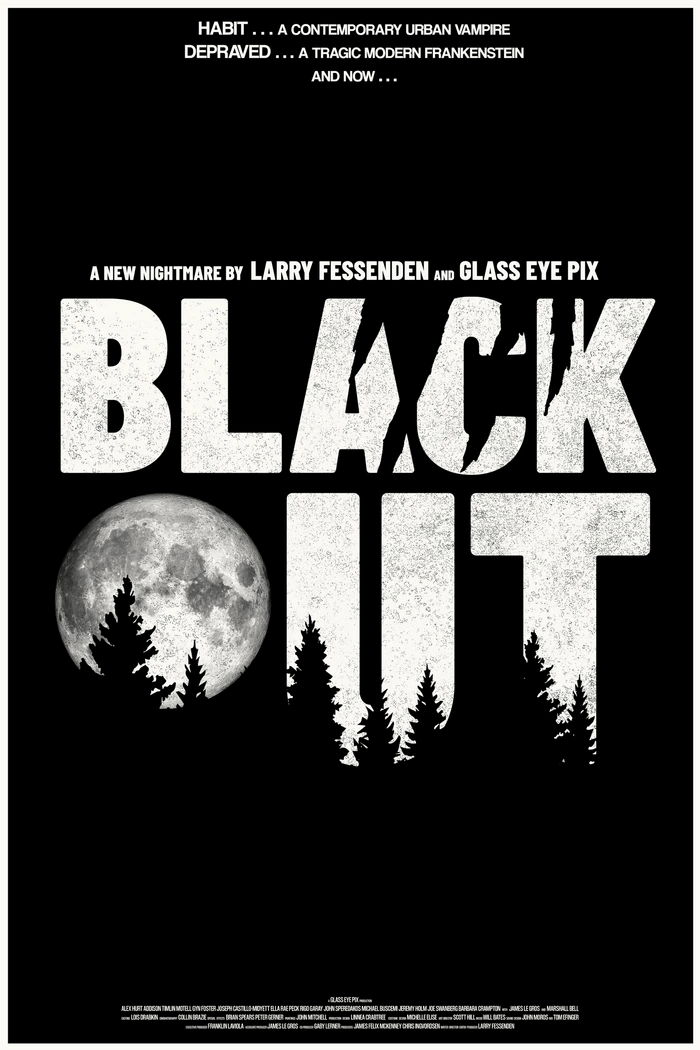
My coverage of the 2023 Fantasia International Film Festival kicks off with the world premier of Blackout. Written and directed by horror favorite Larry Fessenden (Beneath, Depraved), Blackout tells the story of a painter named Charley living in a small town. With deadly attacks happening every month and tensions rising in the town, the painter sets out to tie up loose ends before putting an end to the carnage.
At first, Blackout seems like a typical, 80’s-inspired creature feature. Everything from the cold opening to the creature effects feels reminiscent of that era. Yet as the film progresses, the plot proves to offer so much more. Lycanthropy in horror often acts as a metaphor for something else. Horror fans have seen it used to represent puberty, sexuality, queerness, and even the AIDs epidemic. Fessenden uses lycanthropy to tell a story of alcoholism. After losing his father and being faced with some of his corrupt dealings, Charley sinks into a depression fueled by alcohol. It changes him, effectively ruining his career and destroying his personal relationships. Charley’s monthly transformations into a deadly wolfman change him into someone he doesn’t recognize who would hurt those he loves most. Afterward, he doesn’t remember what he’s done, he just gets enough flashes of memory to know he should feel guilty. It’s a fresh take on lycanthropy that is compelling and tells an incredibly powerful story.
Fessenden also takes care to incorporate various sociopolitical issues into his film. There’s a corrupt contractor whose big building project could potentially pose an environmental hazard. There’s rampant racism as a local Mexican man is blamed for the killings. There’s even a growing divide in the small town as more murders occur, threatening to cause a violent rift between the local residents. It’s clear Fessenden chose to include these elements not only because they are relevant to the world today, but also because these are causes he personally feels strongly about.
While, for the most part, Blackout tells a captivating story, it isn’t without its issues. At first, the film does a great job of introducing the audience to the various characters, learning the social dynamics of the town, while becoming endeared to Charley. Once the horror and violence ensues, the pacing tends to be somewhat uneven, quickly switching back and forth from all-out chaos to more subdued drama. The film also leaves a lingering question around the origin of Charley’s newfound lycanthropic state. Without giving too much away, it seems the origin is meant to be left a mystery for audiences to decide, but at the same time the ending presents two different conflicting answers that might cause some confusion.

With many indie horror films, a key component to their success is having a strong cast. Blackout not only includes many familiar faces, including Barbara Crampton (Jakob’s Wife), Jeremy Holm (The Ranger), Marc Senter (Old Man), and Kevin Corrigan (Pineapple Express), but it also has a wonderful lead actor. Alex Hurt (Minyan, Bonding) stars as tortured artist Charley. From the moment Hurt shows up on screen, he has an effortless charm and kindness that is sure to immediately endear audiences to his character. It makes the film all the more heartbreaking as Charley attempts to improve the town he loves while also struggling with his own demons. Hurt also does a great job performing the physicality during his werewolf transformation and as the creature itself. The entire ensemble cast is superb, but Hurt’s performance is what makes Blackout special.
As with any low-budget horror film, Blackout features some slightly goofy yet eye-catching practical effects. For Charley’s transformation, the filmmakers went with a very classic wolfman style of werewolf. The look maintains much of the man, adding a fair amount of fur, pointy ears, sharp fangs, and deadly claws. Even though the practical werewolf has an inherent silliness about it, it also adds to the charm of the film. To ground the werewolf scenes, there are very well done practical wounds with plenty of blood. One visual aspect that really stands out in Blackout is Charley’s paintings. The paintings themselves include beautiful pastoral scenes, as well as more dark and visceral paintings of what Charley can remember from being a werewolf. In one scene, Charley wakes up in the woods the morning after transforming. As he gazes at the trees and sky above, the audience is shown his paintings rather than the actual scenery. It adds a sense of beauty to the destruction and allows the audience to see the world through Charley’s eyes.
Blackout is a compelling, dramatic horror film using lycanthropy to tell a heartbreaking story of alcoholism. Fessenden once again proves he is a master of indie horror. He crafts a plot that perfectly uses horror to contextualize real-life issues. Despite the pacing issues and lingering questions some audiences might have, the end result is still a powerful film blending trauma and horror along with a fantastic cast, fun practical effects, and eye-catching visuals.
OVERALL RATING: 6.5/10
 The Blogging Banshee
[…] performances are a highlight of Crumb Catcher. Rigo Garay (Blackout, The Leech) stars as author and newly-married man Shane. Within the first 15 minutes, audiences […]
LikeLike